The Smartest Way to See St. Augustine — If You Use It Right
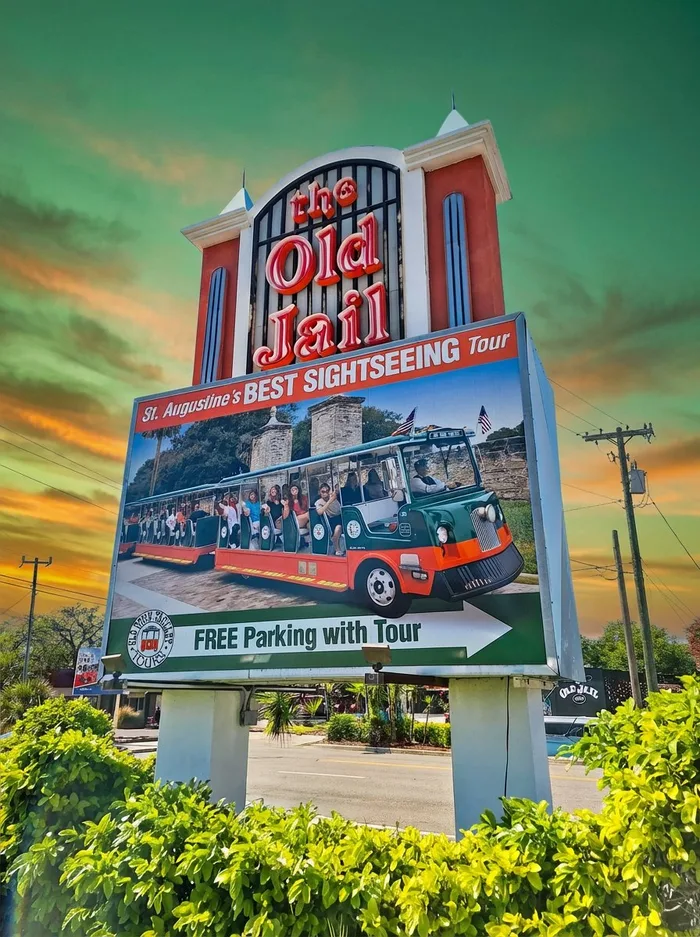
The Old Town Trolley is the best parking solution in St. Augustine. That's not a backhanded compliment — it's the truest thing you can say about it. Park free at the Old Jail on San Marco Avenue, buy a day pass, and you never have to think about a parking garage, a meter, or moving your car again. In a city where parking is genuinely difficult and genuinely expensive, that alone is worth the ticket price.
The hop-on, hop-off loop covers 22 stops across seven miles of the Ancient City, with trolleys running every 15 to 20 minutes from 9 AM to 4:30 PM. One full circuit without getting off takes about 90 minutes. The narration is live — no pre-recorded tracks — and the guides are, almost without exception, excellent. Locals who've lived in St. Augustine for years still ride it with visitors because they keep learning things.
"The trolley stays on the mainland. If you want the Lighthouse or the Alligator Farm, you need the Beach Bus — and that's a different vehicle entirely."
Here's what most first-timers get wrong: the main trolley loop does not cross the Bridge of Lions to Anastasia Island. The St. Augustine Lighthouse and the Alligator Farm are both on Anastasia Island. To reach them, you use the separate Beach Bus shuttle — included free with your trolley ticket, but a completely different vehicle that runs just once per hour. More on that below. Plan accordingly, because missing the Beach Bus timing has cost more than a few visitors a trip to the Lighthouse.
The 22 Stops: What to Know at Each One
The loop runs in one direction. You can hop off at any stop, spend as long as you want, and reboard the next trolley. The stops below are listed in route order starting from the Old Jail.
Start here. This is the main boarding hub and the free parking lot. The Old Town complex includes the Old Jail Museum, the Oldest Store Museum Experience, and the St. Augustine History Museum — all walkable on-site before you board. Budget two hours here if you're doing the attractions. Tickets can be purchased at the booth on-site.
The city's official visitor center. Good for maps, brochures, and last-minute planning. Restrooms available. Just minutes from Stop 1 — most riders stay on through here.
America's oldest wax museum, sitting inside the historic Old Drugstore building. Located steps from the City Gates and the entrance to St. George Street pedestrian district. Hop off here if you want to walk St. George Street — it's faster on foot than waiting for Stop 7.
The original 1808 coquina stone gates that marked the northern entrance to the walled city. One of the most-photographed spots in St. Augustine and a five-second walk from the entrance to St. George Street. If you're only hopping off once in this area, hop off here.
A two-acre living history museum in the heart of downtown, recreating four centuries of St. Augustine life through working craftspeople and period demonstrations. Steps from the Castillo and the Pirate & Treasure Museum. Allow at least an hour if you get off here.
A hotel stop that also offers views across Matanzas Bay. Mostly a boarding convenience stop for guests staying in this area. Most riders stay on.
The pedestrian spine of historic St. Augustine — cobblestone, no cars, lined with shops, galleries, and restaurants in buildings that date back centuries. Allow at least an hour to walk it properly. The Columbia Restaurant is nearby. This and Stop 17 (Castillo) are the two stops most worth your time.
A stop in the historic religious district, near the Cathedral Basilica of St. Augustine — the oldest Catholic parish in the United States. Worth a few minutes inside if the doors are open. The architecture alone earns the detour.
An 1883 replica of a section of the Alhambra palace in Granada, Spain, built by eccentric millionaire Franklin Smith using coquina blocks. Unusual, beautiful, and almost always uncrowded. One of the hidden gems on the route.
Henry Flagler's former Alcazar Hotel, now housing one of the finest collections of Gilded Age American art and antiques in the South. The building itself — Spanish Renaissance, built 1888 — is as impressive as anything inside it. Flagler College sits directly across King Street. Allow 90 minutes minimum.
An essential and often overlooked stop covering St. Augustine's African-American history — the city's role on the Underground Railroad, the Civil Rights Movement of the 1960s, and the community's 450-year presence in the Ancient City. Open daily 10:30 AM–4:30 PM, 1–4:30 PM Sundays and Mondays. Admission approximately $10.
Florida's most awarded craft distillery, operating out of a 1907 ice plant. Free tours, tastings, and a cocktail bar on-site. The Florida double cask whiskey is the one to try. Book tour times in advance on weekends.
A working winery in a converted 1920s building, with free tasting room access and a rooftop bar with views across the city. Muscadine grapes, symphony white, and the blue crab red are crowd favorites. Often livelier than visitors expect.
The historic central plaza established in 1573, flanked by the Cathedral Basilica and the Government House. This is also where you board the Beach Bus to reach the Alligator Farm, Lighthouse, and St. Augustine Beach. The Beach Bus departs here hourly — see the schedule below. The Columbia Restaurant on St. George Street is a short walk from this stop.
Waterfront views across Matanzas Bay toward Anastasia Island. A good spot to stretch your legs and get your bearings on the city's geography. Boat tours and water taxis depart from nearby.
The oldest surviving Spanish colonial dwelling in the United States, built in the early 1700s using coquina — the same local shellstone as the Castillo. Guided tours run 25 minutes. A National Historic Landmark and one of the genuinely oldest things you can walk through in America.
The most important thing to see in St. Augustine, full stop. Built 1672, never taken by force in 350 years. The coquina walls absorbed cannonballs rather than shattering — a fact that saved the city repeatedly. Cannon firings on weekends at 10:30 AM, 11:30 AM, 1:30 PM, 2:30 PM, and 3:30 PM. Allow 2–3 hours. Read the full guide here.
Housed in a former Flagler-era hotel, the Castle Warden. The building's history — haunted, storied, previously owned by Robert Ripley himself — is more interesting than most of the exhibits. Worth a walk past even if you don't go in.
A second major trolley hub with ticket sales, a gift shop, and boarding access. If you parked downtown instead of at the Old Jail, this is a convenient re-boarding point. The loop continues from here toward the Mission and Fountain of Youth.
The site where the first Catholic parish Mass in America was celebrated on September 8, 1565 — the day Pedro Menéndez de Avilés founded St. Augustine. The 208-foot stainless steel cross marking the spot is visible from miles away. Entry gates close at 5 PM (4 PM Sundays). Free admission.
A massive Southern live oak estimated at over 400 years old — a living link to the earliest decades of the city's existence. The tree predates most of what visitors come to St. Augustine to see. Short walk from the trolley stop.
The site of America's first European colony, 15 waterfront acres where Ponce de León landed in 1513. Wild peacocks roam freely throughout. You can drink from the spring — it tastes like sulfur and you should drink it anyway. Spring water, planetarium, Native American exhibits, and waterfront views across the Matanzas River. Allow 1.5–2 hours. Full guide: Fountain of Youth.
The Beach Bus: Anastasia Island Attractions
This is the piece most visitors don't understand until they're standing at the wrong stop wondering where the trolley to the Lighthouse is. There is no trolley to the Lighthouse. The main loop stays on the mainland. The Beach Bus is a completely separate shuttle — same company, included free with your trolley ticket, but a different vehicle on a different schedule.
🚌 Beach Bus — Free with Trolley Ticket
The Beach Bus crosses the Bridge of Lions to Anastasia Island and serves attractions the main trolley loop cannot reach. It departs from Stop 14 (Cathedral Basilica / Plaza de la Constitucion) once per hour.
Departs Stop 14 heading to the island:
8:35 AM · 9:35 AM · 10:35 AM · 11:35 AM · 12:35 PM · 1:35 PM · 2:35 PM · 3:35 PM · 4:35 PM
Beach Bus stops on Anastasia Island:
Alligator Farm (8:40 AM, 9:40 AM, etc.) → St. Augustine Beach hotels → St. Augustine Beach (A Street)
Last bus returning to Stop 14: 4:35 PM daily. Plan accordingly — if you miss this, you're calling a rideshare.
Important: The Beach Bus runs once per hour and does not always sync neatly with the main trolley schedule. Visitor reviews consistently note waiting 20+ minutes at Stop 14 for the bus. Build this into your timeline — if you're planning to visit the Alligator Farm or Lighthouse, treat the Beach Bus as its own half-day excursion, not a quick side trip.
Note on the Lighthouse: The competing Red Train tour does include the Lighthouse as a regular stop on its main loop. If the Lighthouse is a priority and Beach Bus timing is a concern, the Red Train is worth considering as an alternative.
Tickets, Hours & What It Costs
Quick Facts
Hours: Daily 9 AM – 4:30 PM. Last trolley departs Stop 1 at 4:30 PM. Closed Christmas Day. Hours may extend during peak season — call (904) 829-3800.
Frequency: Every 15–20 minutes. One full loop = approximately 90 minutes.
Price: 1-day pass approximately $34–$40 per adult. 2-day passes available. Children prices vary. Buy online for the best rate and to skip the booth line.
What's included: Unlimited hop-on hop-off all day · Free admission to St. Augustine History Museum · Free Beach Bus shuttle to Anastasia Island · Complimentary hotel shuttle service.
Parking: Free at the Old Jail complex, 167 San Marco Avenue (Stop 1). This is the best free parking in the historic district.
Book online: trolleytours.com/st-augustine
What Visitors Get Right — and Wrong
Do: Ride the Full Loop First
Before hopping off anywhere, stay on for the full 90-minute circuit. You'll get the complete narrated overview of the city, see which stops look most interesting, and understand the layout before you start making decisions. It's the best $34 orientation you can buy in St. Augustine.
Do: Plan the Beach Bus Separately
If the Alligator Farm or Lighthouse is on your list — and both should be — treat it as its own half-day. Ride the main loop in the morning, be at Stop 14 before the hourly Beach Bus departure you're targeting, and give yourself the full afternoon on Anastasia Island. Trying to squeeze it in as a quick side trip usually means missing the bus or rushing a place that deserves more time.
Don't: Assume You Can Walk Between Stops
The trolley covers seven miles. Some stops are close enough to walk between; others are significantly further than they look on the route map. Use the trolley between anything north of St. George Street and south of the Castillo — the distances add up fast in Florida heat.
Do: Buy Online in Advance
Online pricing is consistently lower than at the booth. More importantly, you skip the ticket line at Stop 1 on busy weekends, which can run 20–30 minutes in peak season. Buy the night before.
Don't: Forget the 4:30 Cutoff
The last trolley and the last Beach Bus both stop running at 4:30 PM. This bites more visitors than any other single issue. If you're planning dinner in the historic district, either finish your trolley day early enough to walk back or be prepared to move your car. The trolley does not run in the evenings.
Frequently Asked Questions
Does the Old Town Trolley go to the Lighthouse?
Not on the main loop. The trolley does not cross to Anastasia Island. The St. Augustine Lighthouse is accessible via the separate Beach Bus shuttle, which is free with your trolley ticket and departs from Stop 14 (Cathedral Basilica) once per hour. Note that the Red Train tour does include the Lighthouse as a regular stop on its main route if timing is a concern.
Does the Old Town Trolley go to the Alligator Farm?
No — same answer as the Lighthouse. The Alligator Farm is on Anastasia Island and is served by the Beach Bus shuttle, not the main trolley loop. The Beach Bus stops at the Alligator Farm approximately 5 minutes after departing Stop 14.
How much does the Old Town Trolley cost?
A one-day pass runs approximately $34–$40 per adult when purchased online. Two-day passes are available and often represent better value for a longer stay. Children's pricing varies by age. Book online for the lowest price and to skip the ticket booth queue.
How often does the trolley run?
Every 15–20 minutes from 9 AM to 4:30 PM daily. One full loop takes about 90 minutes. The Beach Bus to Anastasia Island runs once per hour from Stop 14.
Where is the best place to start the trolley tour?
Stop 1 at the Old Jail complex, 167 San Marco Avenue. Free parking is available on-site, making it the logical starting point for almost everyone. You can also start at any other stop, but this is where the free parking and the main ticket booth are.
What's the difference between the Old Town Trolley and the Red Train?
Both are hop-on hop-off narrated tours covering similar ground. The key practical difference: the Red Train includes the St. Augustine Lighthouse as a regular stop on its main loop. The Old Town Trolley does not — Lighthouse access requires the separate Beach Bus shuttle. Otherwise both offer comparable coverage of the historic district.