
First Coast
Explorer
Florida's First Coast
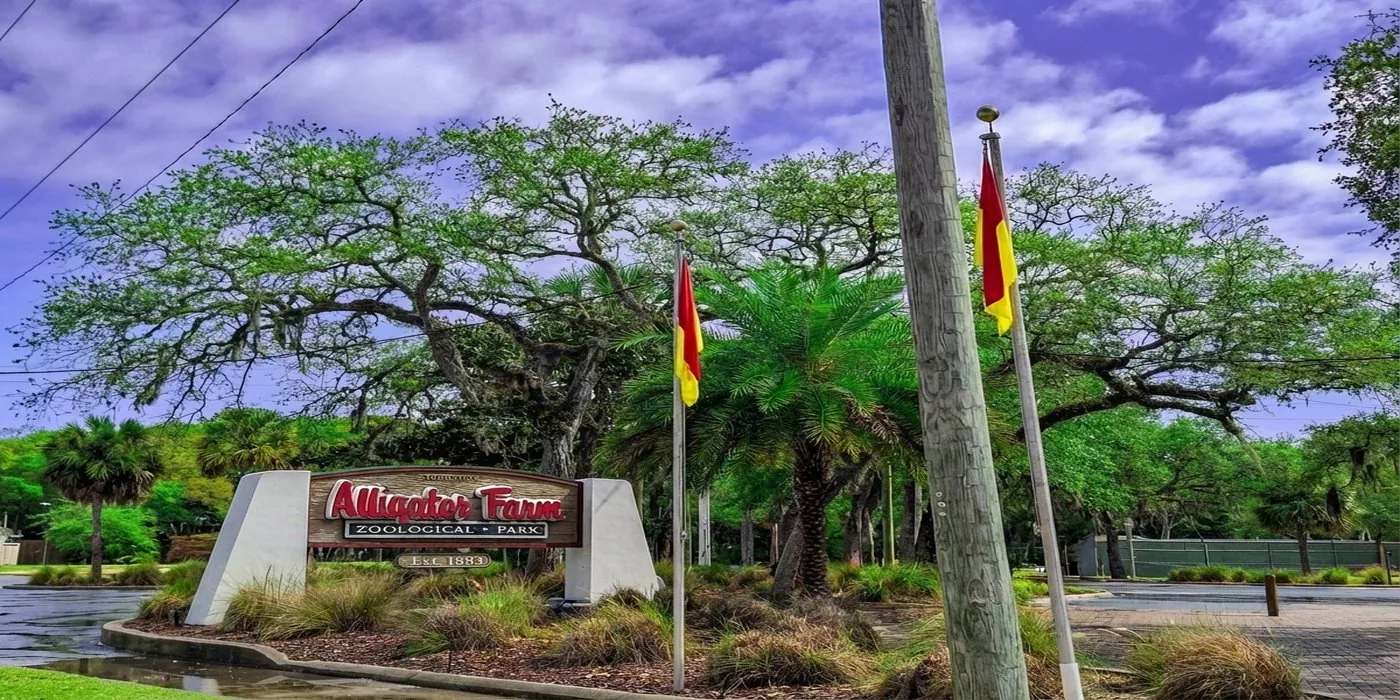
Open since 1893. The only place on earth with all 24 living crocodilian species. Roseate spoonbills nesting overhead. A zipline over the gators if you need more Florida in your Florida.
The St. Augustine Alligator Farm has been open since 1893 — which makes it older than Florida's statehood is common knowledge, older than the automobile, and older than most of the oak trees shading Anastasia Island. It started as a small exhibition of Florida reptiles. It is now an accredited zoological park and the only facility on earth that houses all 24 living species of crocodilians. That is not marketing language. The Association of Zoos and Aquariums confirmed it in 1989 and nothing has changed.
What that means in practice: you can walk from an American alligator to a saltwater crocodile to a dwarf caiman to a gharial in the span of twenty minutes. You can stand at the edge of the lagoon and look at animals that haven't changed significantly in 200 million years. Nature occasionally gets its design right on the first try and sticks with it.
"The roseate spoonbill does not need elaboration. It is pink, it is improbable, and it feeds by sweeping a spatula-shaped bill through shallow water above a lagoon full of alligators. Nature occasionally gets carried away."
Here is what most visitors don't know before they arrive: the trees above the alligator lagoon are one of the best wild bird nesting sites in Florida. Roseate spoonbills, great egrets, tricolored herons, snowy egrets, anhingas, and other species return every year to nest in the branches directly above hundreds of alligators and crocodiles. The logic is straightforward — no raccoon or rat is going near eggs when there are that many apex predators below. The birds figured this out a long time ago.
Between February and July the rookery is active. The farm even runs a live rookery webcam you can check before you visit. Birders and wildlife photographers mark their calendars for it. Roseate spoonbills begin arriving in January, great egrets around Valentine's Day. By late March chicks are hatching. The scene — pink spoonbills and white egrets in the canopy, ancient reptiles below — is genuinely unlike anything else in Florida. If this coincides with your visit, plan extra time.

The park holds over 125 animal species beyond the crocodilians. Lemurs, sloths, Galapagos tortoises, pygmy marmosets, macaws, tarantulas, venomous snakes, and vultures all have their own exhibits. Sections are organized by region: Land of Crocodiles, Birds of Africa, The Great Downunder, Oasis on the Nile. The themed organization sounds gimmicky but it works — each section gives you context for what you're looking at beyond just a name on a plaque.
Live animal shows and feeding demonstrations run throughout the day. The keeper talks are worth timing your visit around — watching a zoologist feed American alligators while explaining the biology of an ambush predator that has outlasted the dinosaurs is a different experience from reading a sign. Plan three to four hours minimum to see the park properly. Tickets can be purchased to allow re-entry, which is worth doing if you want to leave for lunch and come back for afternoon shows.
Crocodile Crossing is the zipline attraction — 35 feet up, 7 acres, directly over the lagoon. It requires a separate ticket from general admission and is sold at a different entrance steps from the main gate. It is not included in zoo admission. If adventure activities are on the agenda, book that separately before your visit.
The admission price stings a little — $36.99 is big zoo pricing for a mid-size park. But the collection is genuinely world-class in the crocodilian category, the bird rookery is a legitimate wildlife experience that has no equivalent in Florida, and the live shows are well done. If you have children, this is non-negotiable on a St. Augustine trip. If you don't, go during rookery season and bring a real camera. You will not regret either.
Arrive at 9 AM, check the show schedule at the gate, and plan your path around the feeding times. The rest takes care of itself.