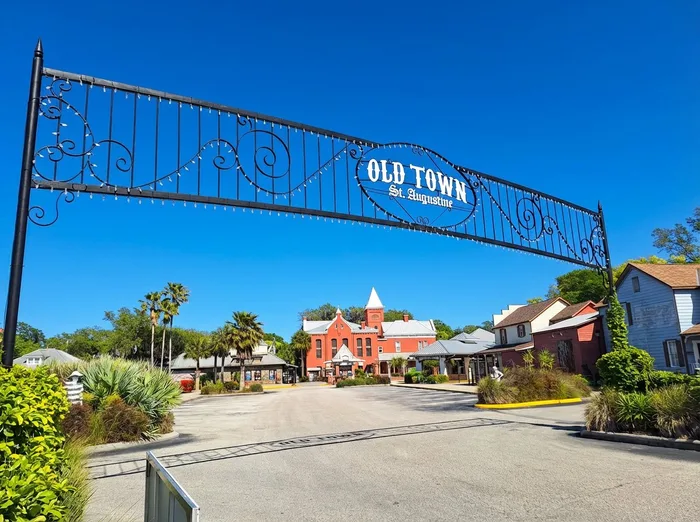
It looked like a Victorian house. Handsome roofline. Muted paint. The kind of building that blended into a wealthy neighborhood so completely that you'd walk right past it without a second thought. That was entirely the point.
The year was 1878. A man named Henry Flagler — co-founder of Standard Oil, one of the richest men alive — had traveled south from New York with his ailing wife on doctor's orders. The Florida climate, they said, might help. It didn't. She died. Flagler remarried. And found himself drawn back to a small, ancient city on Florida's northeast coast.
St. Augustine. Founded 1565. The oldest continuously occupied European settlement in the country. Flagler saw something there that other wealthy men had missed. Not the history. Not the Spanish architecture. Not the cobblestones worn smooth by three centuries of foot traffic.
He saw a destination. And he set about building one.

The Hotel Ponce de Leon opened in 1888. It was extraordinary by any measure. Four stories of Spanish Renaissance architecture. 540 rooms. The first building in Florida wired for electricity. Tiffany glass in the dining room. Steam heat. Carved wood ceilings. The Gilded Age set arrived by private railcar. Flagler had built the finest resort hotel in the American South.
The problem was the view from the windows.
Directly across from Flagler's masterpiece sat the old St. Johns County Jail. Crumbling. An eyesore. Visible from the very rooms where wealthy guests took their morning coffee. It did not fit the picture Flagler was painting. And there was a second problem. The jail sat on land Flagler needed. Land he had other plans for.
He needed that land. He needed the jail gone. And he needed the criminals — well, he needed them somewhere else. Somewhere nobody important would have to look at them.
In 1891, Flagler struck a deal with St. Johns County. He would donate $10,000 toward a new jail. Larger. Better. Built by professionals. The county accepted. The contract went to the P.J. Pauley Jail Building and Manufacturing Company of St. Louis, Missouri — specialists known for their advanced security designs and their ability to hold even the most dangerous men securely.
The new jail would be built north of downtown. Far enough from Flagler's hotels that his guests would never see it. Far enough that the sound and the smell and the presence of it would not intrude on the elegant vacation he had constructed for them.
There was one condition.
It could not look like a jail.
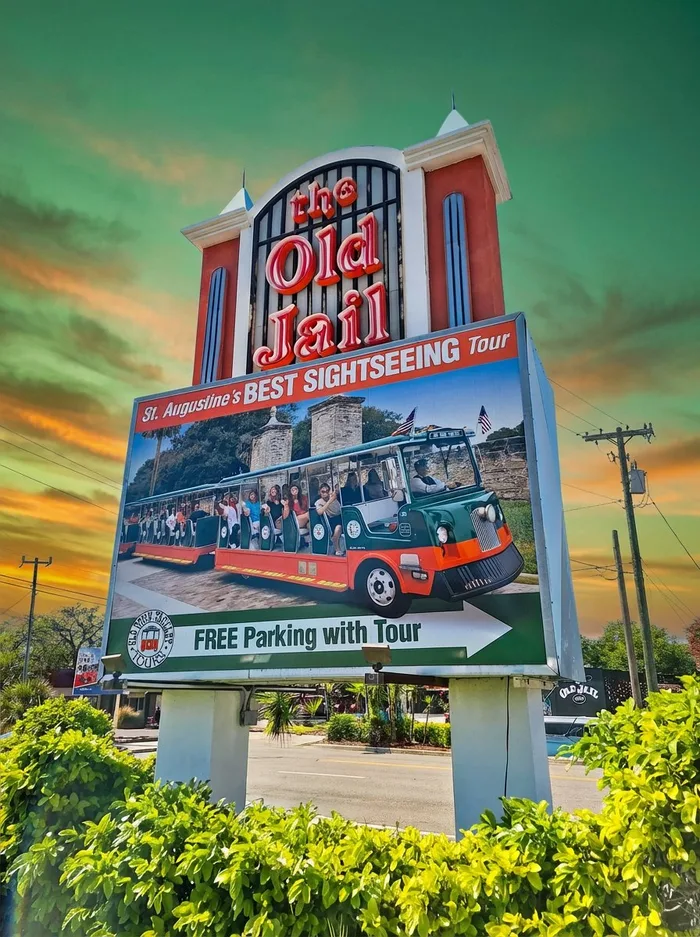
The Pauley Company delivered. Romanesque Revival architecture. Victorian detailing. The kind of dignified facade you'd find on a courthouse or a private club. The windows had bars — but bars, at that distance, read as decorative ironwork. Flagler's investors rode past in their carriages. His guests strolled by on afternoon walks. Nobody knew what it was.
Inside, it was a different world entirely.
Seventy-two men in the northern wing. Twelve women in a separate section. No plumbing in the cells. Mattresses stuffed with Spanish moss — which attracted insects and spread disease. A doctor visited only when someone was to be executed, to record precisely how long it took for the condemned to die. If you were sick otherwise, you were on your own.
The food was hardtack. Dense biscuits of flour, water, and salt, baked until they could survive a sea voyage. Standard military rations for a century. By 1891, considered adequate for prisoners. The inmates often found them already occupied. The hardtack had company.
Every able-bodied man worked. Chain gangs clearing swamps. Road construction under the Florida sun, shackled at the ankles, without shoes. Those too ill to work were assigned to tend the front garden. The grounds around Flagler's elegant deception were kept immaculate by the men trapped inside it.
The sheriff who oversaw all of this stood six feet and six inches tall and weighed three hundred pounds. He walked the cell blocks carrying a coiled rope. The inmates did not ask what it was for.
His name was Joe Perry. Two terms — 1889 to 1897, then 1901 to 1919. Well-liked in the community. Not well-liked in the cells. Perry rented prisoners out to local farmers who needed labor. A common enough arrangement in the South at the time — convict leasing, they called it. The men who had already lost their freedom could now lose their days as well, to whatever farmer was willing to pay the going rate.
Eight men were executed on the gallows in the east yard. Photography was banned at the hangings. At the 1906 execution of Sim Jackson — hanged for attacking his wife — one photographer outwitted the deputies and got a single exposure. It is the only photograph that exists of any of the Old Jail's executions. Two doctors had made the trip specifically for the occasion. Not to provide care. To record, with scientific precision, how long it took.
There was also a man named Charlie Powell.
Powell did not kill his wife. Powell killed the man who had been spreading rumors about his wife. He loved her, you see, quite completely. So completely that when a man started talking about her in ways Powell found disrespectful, he resolved the matter in the most permanent way he could think of. Powell's ghost, they say, still haunts the area near the gallows — seemingly reliving it. One assumes he has no regrets.

The jail served St. Augustine until 1953, when the county moved to a modern facility. Closed on a Tuesday. By the following year it had reopened — as a tourist attraction. Same building. Same cells. Same gallows in the east yard. Henry "Slim" McDaniel bought it, preserved it, and opened the doors to anyone curious enough to walk through them.
Today, more than a million visitors have done exactly that. They walk the cell blocks. They stand under the gallows. They hear the stories of Sim Jackson and Charlie Powell and Sheriff Joe Perry with his coiled rope. They eat lunch afterward on St. George Street, a short walk from what Flagler built, most of them unaware that the most interesting building in the complex is not the one with the Tiffany glass.
Henry Flagler paid $10,000 to build St. Augustine's jail. Not from civic duty. Not from philanthropy. He paid it because the old jail was sitting on land he needed — and because he wanted criminals somewhere his guests couldn't see them.
The company he hired to build it would later build Alcatraz.
The building designed specifically to disappear into the neighborhood — the one nobody was supposed to notice — is now the only structure on San Marco Avenue that people drive from three states away to visit.
The Ponce de Leon Hotel is a college. Flagler's railroad is a memory. But the jail he paid to hide from his guests? It outlasted everything. It outlasted him.
Henry Flagler wanted his jail invisible. Instead, he built St. Augustine's most visited secret.
Good day.
The Old Jail is at 167 San Marco Avenue, St. Augustine. Tours depart every 20 minutes from 9 AM – 4:30 PM. Admission approximately $17 for adults. The hardtack is not on the menu.